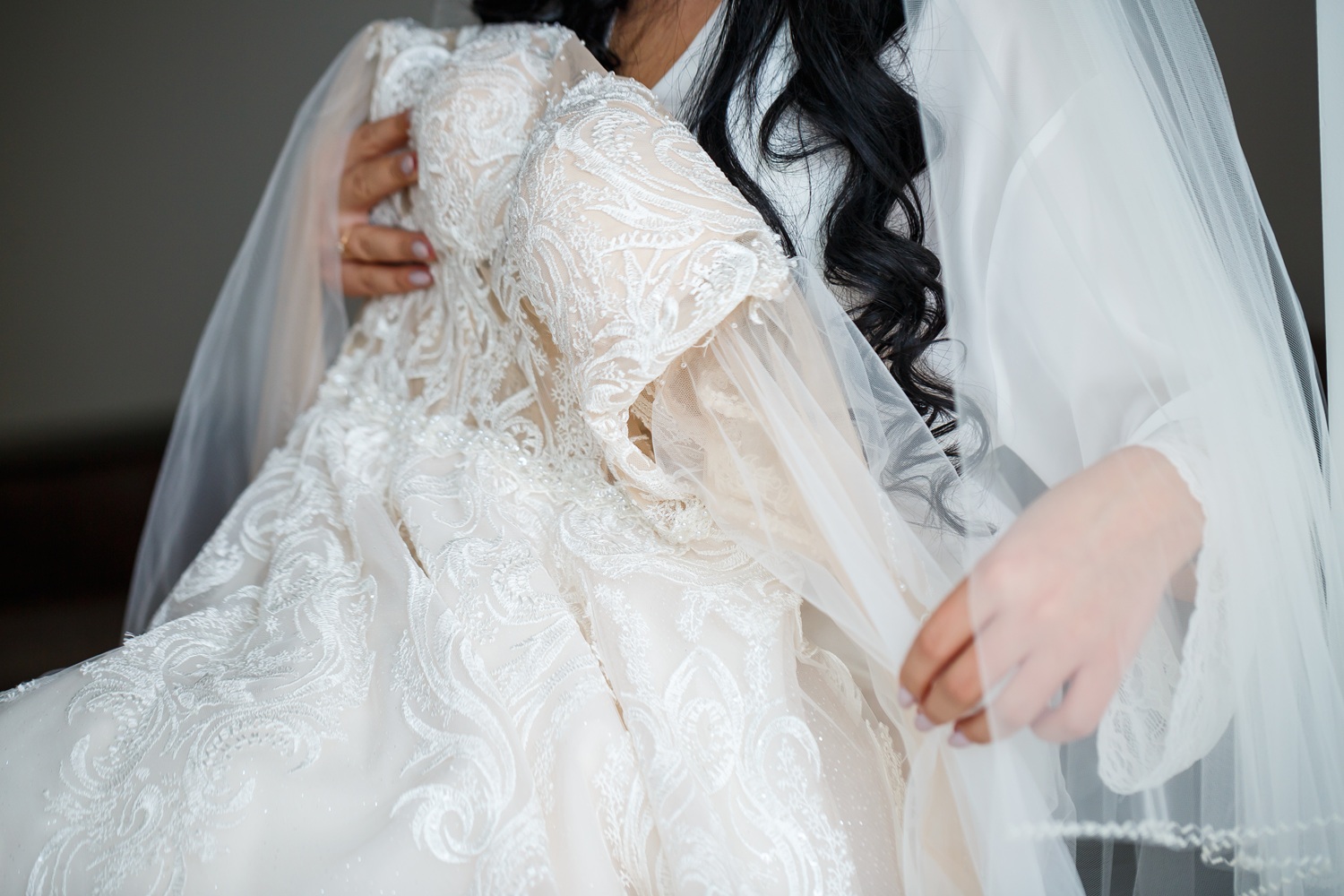
It’s not always possible for some brides to take in their dress for preservation right away, especially when life gets busy after the wedding. The dress might be carefully hung in a closet or stored in its bag “for now.” And while that seems simple enough, a wedding dress requires different care than everyday clothing, and in that window, how you store it matters.
In this article, we go over how to store your dress safely and what to keep an eye on while you wait for preservation.
The Best Temporary Storage Options
Storing your wedding dress before preservation doesn’t have to feel overwhelming. You don’t need expensive boxes or complicated systems – just the right environment and a little bit of care. The goal is to keep the dress stable and untouched until the preservation specialist takes over.
Short-term Storage Options Brides Trust Most
Let’s look at your safest, most reliable temporary storage choices.
1. Interior Bedroom Closet
A bedroom closet that stays cool, dark, and dry is hands-down the best choice.
- Avoid closets that sit on exterior walls (they shift temperatures more).
- Choose a section where the dress won’t be squeezed or pressed.
- Think “steady and quiet” – no sun exposure, no drafts.
2. Under-bed Flat Storage (for heavy dresses)
If your dress is beaded, structured, or naturally heavy, flat storage is usually safer than hanging.
- Use a breathable under-bed box (NOT plastic).
- Add acid-free tissue paper between folds to prevent creasing.
- Make sure nothing else is stacked on top of it.
3. Guest Room Closet
This is ideal if you want your dress completely undisturbed.
- Guest room storage gets far less daily traffic.
- Fabric stays clean and protected.
- Great for ballgowns or dresses with layers.
4. Climate-controlled Storage (when relocating)
Useful for brides who are mid-move or traveling after the wedding.
- Look for units that maintain consistent humidity and temperature.
- Only use this for short periods – think weeks, not months.
A thoughtful temporary setup protects your dress until you’re ready for full preservation.
What Not to Do (No Plastic Bags, Wire Hangers, etc.)
Some storage mistakes can age a wedding dress faster than time itself. Even during short periods, the wrong materials can trap moisture, deform the dress, or leave behind permanent damage. Think of this stage as “protective mode”, as your dress needs breathable, gentle support.
Wedding Dress Storage Mistakes to Avoid
So, let’s look at the top things to avoid if you want your dress preservation service to have the best results.
1. Absolutely no plastic bags.
- Plastic locks in humidity.
- Plastic causes mildew, yellowing, and a musty odor.
- Even high-end boutique plastic isn’t meant for long-term holding.
2. Skip wire or thin hangers.
- They dig into the shoulders and distort the bodice.
- Straps can snap under pressure.
- Heavy dresses especially need strong padded hangers.
3. Avoid attics and basements.
- These areas swing wildly in temperature and moisture.
- Mold, yellowing, and fabric breakdown happen fast.
- “Convenient” isn’t worth the risk.
4. No scented bags, perfumes, or sachets inside storage.
- Oils and dyes can stain delicate fabrics.
- Chemical fragrances can react with fibers over time.
5. Don’t jam or compress the dress anywhere.
- Tight spaces crush embroidery, lace, and appliqués.
- Creases deepen and become harder to fix later.
Avoiding these pitfalls keeps your dress safe and dramatically reduces long-term damage.
How to Avoid Moisture and Mold While Waiting
Moisture is one of the quickest ways a wedding dress can deteriorate before preservation. Even in homes that feel cool and dry, humidity can settle into closets and storage boxes, turning into tiny droplets that eventually stain, warp, or discolor the fabric. And once mold or mildew sets in, even the best preservation specialists can struggle to reverse the damage.
Keeping Your Dress Dry and Mold Free
To protect your dress, you want to control both the environment and the way the dress is stored. Follow these moisture-prevention essentials:
1. Choose a climate-stable room
Pick a location with consistent temperatures – no direct sunlight, no vents blowing on it, and no exterior-wall closets that heat up or cool down too quickly.
2. Use moisture absorbers wisely
Place silica gel packets or acid-free desiccants near the dress (never directly touching it) to balance humidity.
3. Allow light airflow
Open the closet door every few weeks to prevent stagnant air pockets where mold thrives.
4. Skip sealed containers
Airtight boxes trap humidity and can accelerate mildew growth.
Pro Tip: If your dress got damp from rain, sweat, or dancing, let it air out on a padded hanger for a few hours before storing. Don’t use heat tools – natural air drying is the safest method.
How Long You Can Safely Wait Before Preservation
It’s totally normal if you don’t send your wedding dress for preservation right after the big day. Life gets busy – honeymoon, work, moving, thank-you cards – so the dress often sits for a bit before you deal with it.
The dresses won’t fall apart immediately, but stains, oils, and perspiration do start changing the fabric the longer they sit.
Wedding Dress Preservation Timeline
Here’s a simple breakdown of how long you can safely wait.
| Timeframe | What’s Happening to the Dress | Risk Level | Expert Recommendation |
|---|---|---|---|
| 0–3 weeks | Stains still fresh; oxidation hasn’t begun | ⭐ Best | Schedule preservation as soon as convenient |
| 1–3 months | Changes are minimal if stored properly | ⭐⭐ Safe | Keep it in a breathable bag; avoid heat/moisture |
| 3–6 months | Hidden stains start surfacing; fabric is less responsive | ⚠️ Moderately Risky | Don’t delay—book preservation soon |
| 6–12 months | Yellowing, odors, and stiffening start showing | ⚠️ High Risk | Take it to a specialist immediately |
| 1 year+ | Deep-set stains, oxidation, and fabric weakening | ❗ Severely Risky | Skip DIY—professionals only |
Quick Breakdown (For Easy Reference)
- Within a few weeks: The ideal window, fabric is easiest to clean, and invisible stains haven’t set yet.
- 1–3 months: Still totally manageable as long as the dress was stored in a cool, dry, breathable environment.
- 3–6 months: You may start seeing discoloration or marks from sweat, champagne, or makeup.
- 6–12 months: Yellowing becomes visible, and odors may settle in the fabric.
- 1 year or more: Fabric can become brittle, stains oxidize deeply, and restoration becomes more complex.
If your dress has been sitting for years, no need to panic. Don’t try cleaning it at home; just take it to a specialist. Professionals can undo far more damage when nothing has been done to the dress yet.
Make Sure Your Dress Lasts for Years – Trust Troy Cleaners and Book Your Wedding Dress Cleaning and Preservation Service Today
Your wedding day might be behind you, but your dress still holds every beautiful memory. The sooner you have it professionally cleaned, the easier it will be to remove hidden stains and protect its delicate fabric before sending it for long-term preservation.
At Troy Cleaners, we’ve been trusted since 1873 for Professional Wedding Dress Cleaning and Restoration in Port Huron and the nearby areas. Our specialists treat every dress with the care it deserves, removing stains, repairing embellishments, and preserving each layer of lace and silk as if it were our own.
Once restored, your dress is gently folded and sealed in an acid-free preservation box to keep it flawless for years to come. And to make things even easier, our Pickup and Delivery Service is completely free.
Schedule your Wedding Dress Cleaning and Preservation Service with Troy Cleaners today. Call us at (810) 985-7111, visit us at our main location in Port Huron, Michigan, or email clientcare@troy-cleaners.com to get started. Your once-in-a-lifetime dress deserves expert care from the people who’ve been perfecting it for over a century.