Finding a tailor you trust takes more guesswork than most people expect. You can’t try before you buy, and a bad alteration is hard to undo. If you’re new to a neighborhood, or you’ve simply never needed alterations before, you need a way to tell good work from rushed work before you hand over your clothes.
Instead of relying on instinct alone, use these seven signs as your checklist. They highlight exactly what to observe, what to ask, and what to verify during your first visit.
01 | They Ask You to Bring the Shoes You’ll Wear With the Garment
Hem length depends almost entirely on shoe height. Half an inch might not sound like much, but it changes how a pant leg breaks over your foot or how a skirt sits at your ankle. A tailor who asks you to bring the actual shoes to your fitting is thinking about the finished outfit, not just the fabric on the table.
This is one of the clearest signals you’ll get on a first visit, and it costs you nothing to test. If the tailor doesn’t bring it up, mention it yourself and see how they respond. A good tailor will welcome the extra step. One who brushes it off tells you something, too.
What to Ask If Shoes Never Come Up
If you’re at your fitting and nobody has mentioned footwear, ask directly: does the heel height on these shoes change how you’d hem this? A tailor with real experience will have an answer ready, often down to a specific measurement. A vague “it should be fine either way” is worth noting as you weigh the rest of your visit.
02 | They Pin the Garment on You, Not Guess From Measurements Alone
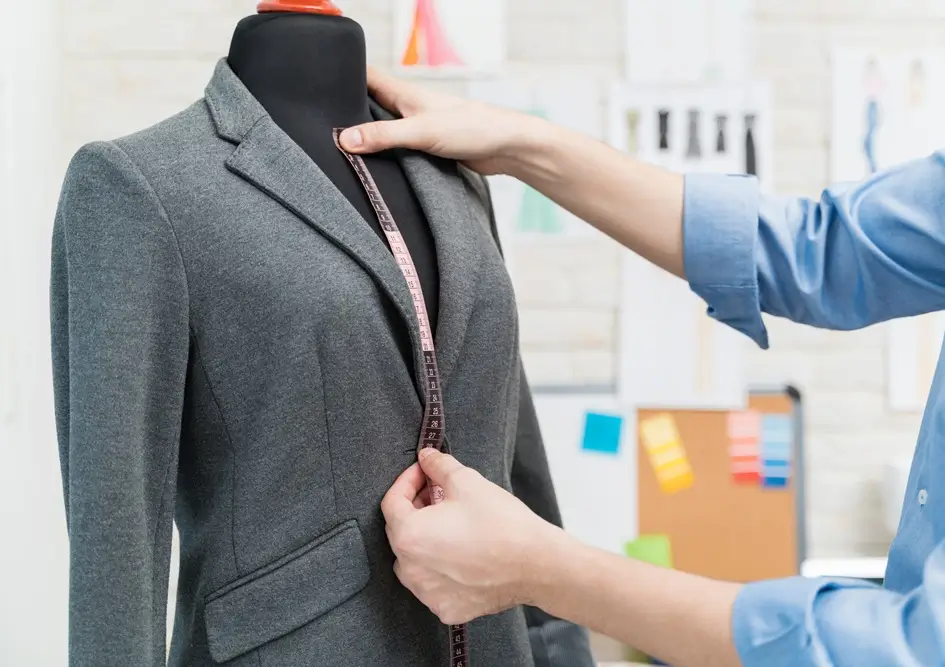
Tape measurements tell you numbers. They don’t tell you how your shoulders slope, how you carry your posture, or how a fabric will hang once it’s fitted to your specific body. For anything beyond a basic hem, an in-person pinning fit is the standard, not an extra step.
A tailor confident enough to skip pinning is either deeply familiar with bodies shaped like yours, or cutting a corner you won’t notice until the garment is already cut. From the outside, those two look identical. That’s exactly why this sign matters.
Why Pinning Matters More for Structured Garments
The more structured a garment, such as blazers, suit jackets, or fitted dresses, the more pinning matters. A simple hem on a straight leg pant has little room for error. A jacket taken in at the waist has to account for how the shoulders and chest move when you sit, reach, or button up.
If you alter something structured, pinning isn’t optional. It’s the difference between a garment that fits and one that just technically matches your measurements.
03 | They Repeat the Plan Back to You Before Cutting Anything
Before any permanent cut is made, a good tailor says the plan out loud. Something like: “we’re taking in the waist half an inch, hemming to just above the ankle, and slimming the sleeve from the elbow down. Does that match what you want?”
This single habit prevents most alteration regrets. Once fabric is cut, there’s no undo button. A tailor who confirms the plan protects your garment as much as their own reputation.
What to Do If They Skip This Step
If your tailor moves straight from pinning to cutting without confirming anything with you, stop and ask them to walk you through exactly what’s changing before they continue. This isn’t rude; it’s standard practice at any shop that’s confident in its process. Their answer, and how comfortable they give it, tells you a lot about how the rest of the alteration will go.
04 | Their Interior Finishing Looks as Careful as the Outside
Flip a finished garment inside out and look closely. Interior seams should lay flat and be pressed, not bunched or raw. Thread color should match the fabric. There shouldn’t be loose threads, puckered stitching, or a hem line that shows on the outside when blind hemming is the appropriate technique for that fabric.
This is the most visual sign on this list, and it’s one you can check before you even commit to using a tailor. Ask to see a finished piece, either something of yours from a past visit or a sample piece in the shop.
A Quick Two-Minute Check You Can Do Yourself
Hold up the garment to natural light and look at the seam from both sides. Run your fingers along the inside hem. It should feel smooth, not stiff or lumpy. If you can feel ridges or see puckering along a seam, that’s a sign the work was rushed rather than pressed and finished properly.
05 | They Say No When an Alteration Isn’t a Good Idea
Not every request should be granted, and a tailor who knows this does you a favor. Taking in a suit jacket more than about an inch and a half at the sides usually throws off the garment’s balance. Some fabrics don’t hold a new seam cleanly no matter how skilled the tailor.
A tailor who tells you “that won’t look right, here’s what I’d suggest instead” shows you both skill and honesty. One who agrees to anything you ask, regardless of whether or not it will actually work, isn’t doing you any favors.
How to Tell the Difference Between Pushback and Upselling
Honest pushback comes with a reason and an alternative. “That taper will pull at the seams because of how this fabric is cut, but I can take in an inch and keep the line clean,” is a specific, informed answer. Vague resistance with no explanation, or pushback that always seems to lead to a pricier service, is worth a second opinion elsewhere.
06 | Their Turnaround Time Is Realistic, Not Instant
Good tailors are usually booked. A realistic wait is one to two weeks for standard alterations, and longer for wedding dresses or formalwear that require extra fittings. A shop promising complex work the same day or next day is either unusually slow otherwise, or moving faster than careful work allows.
Permit yourself to wait. That extra week is often what buys you the quality behind every other sign on this list.
How Turnaround Time Should Scale With Complexity
A basic hem might reasonably be done in a day or two. A jacket taken in at the shoulders or a dress needing multiple fittings should take longer, not because the tailor is slow, but because complex changes need more than one round of adjustment to get right. If a shop quotes the same turnaround for a simple hem and a full jacket reconstruction, ask why.
07 | Their Pricing Is Itemized, Not a Flat “It Depends”
A professional quote breaks down pricing by alteration type: hemming, waist adjustment, sleeve tapering, with a clear number attached to each before any work begins. This is standard practice, not an extra courtesy.
There’s a real difference between a transparent range, “hemming runs fifteen to twenty-five dollars depending on lining”, and a vague deferral, “we’ll figure it out at the end”. The first is a professional quote. The second is a guessing game to which you didn’t agree.
Questions to Ask Before You Approve a Quote
Ask what happens if the alteration takes more fabric or time than expected, and whether or not that changes the price after the fact. A shop with clear pricing will have a straightforward answer, often a flat policy for how they handle surprises. If the answer is another “it depends”, treat that as part of your overall read on the shop, not a dealbreaker on its own.
What to Do on Your First Visit to a New Tailor
You don’t need to run through all seven signs like a checklist in front of the tailor. Just pay attention.
- Bring the shoes you’ll actually wear with the garment
- Start small, a hem or a simple taper, before trusting them with a wedding dress or an expensive suit
- Notice whether or not they pin, confirm the plan, and quote clearly before they start
- Ask to see finished work if you’re not sure
A small first alteration tells you almost everything you need to know before you commit to something bigger.
Ready to See These Signs in Person? Bring It to Troy Cleaners and Find Out
Reading about what a good tailor should do is one thing. Feeling it during your own fitting is another, and that’s the difference we aim to give you every time you walk through our door.
At Troy Cleaners in Lapeer, Michigan, every fitting starts the same way: a real pinning, a plan we confirm with you before we cut anything, and pricing you see before we start. We treat a simple hem with the same care as a wedding dress, because the alterations that matter most are usually those that seem the smallest.
We offer the best in alterations in Lapeer, Michigan, so come and see the difference for yourself.
📍 Address: 604 S. Main St., Lapeer, MI
📞 Phone: +1 810-255-1873
📧 Email: clientcare@troy-cleaners.com